
By Robin WenData as of
High-Purity Quartz Manufacturers: Two Names
Two companies produce high-purity quartz in the United States, both around Spruce Pine. In 2026 one of them closed a plant there indefinitely.
On this page
Two companies produce high-purity quartz in the United States, and the current summary places both around Spruce Pine, North Carolina, without naming either. That is the whole of the American quartz manufacturers list. Data as of November 2026, and the axis here is grade rather than company size, because no company’s output is published: a country total exists, it is an estimate rounded to the nearest 100,000 tonnes to avoid disclosing one company’s data, and the chapter does not split it between the two plants.
The summary records that world mine production and reserves information was not available
and that global reserves were estimated to be limited to a few locations
. The chapter does publish other numbers — import and export tonnages for piezoelectric crystal, per-kilogram prices, and stockpile figures — but none of them is a production total.
What is published is a range of value, and its width is why a per-company ranking says little. Ground high-purity quartz was estimated at $500 to $12,000 per tonne in 2025, against $500 to $20,000 in 2023. The chapter’s own footnote says the range reflects the percentage of quartz, the percentage and type of impurities and the end use together, so the 24-fold spread is not a grade ladder on its own, and the values are estimated rather than transacted.
| Measure | 2021 | 2022 | 2023 | 2024 | 2025 |
|---|---|---|---|---|---|
| Ground HPQ sold or used, t (estimated, rounded to 100,000) | 100,000 | 100,000 | 200,000 | 200,000 | 100,000 |
| Price range, $/t (estimated) | 500–16,000 | 500–17,000 | 500–20,000 | 500–17,000 | 500–12,000 |
| Cultured quartz crystal sold or used | W | W | W | W | W |
Read the tonnage row as bins rather than a curve. The chapter says production is estimated and that the figures are rounded to the nearest 100,000 tonnes to avoid disclosing company proprietary data, so 100,000 and 200,000 are adjacent bins eight years apart, and the return to 100,000 in 2025 lands where 2021 and 2022 already were.
Why this list is mostly American
A USGS summary can name a national count because a national statistical agency asks for one. No equivalent public source lists high-purity quartz producers globally with the same discipline, so a list built on verifiable counts ends up concentrated where the counting happens.
That is a statement about the data, not about the industry. The United States has two, both near Spruce Pine in North Carolina, where the ore bodies that supply crucible-grade material sit. Processing capacity exists elsewhere — Donghai county in Jiangsu is the best documented cluster — but the high-purity quartz page covers that geography, and it is a different claim from a producer count.
The two quartz manufacturers, in their own words
The summary names neither company, so the two entries below come from the companies themselves. That Sibelco and The Quartz Corp are the two the Survey counts is an inference from a shared town and from both describing production there. No source read for this page states that these are the two, and a third operator inside the same town would not change the count the chapter publishes.
For a quartz manufacturers list the two entries differ in what they disclose. Sibelco states on its own page that its IOTA products are mined from two uniquely pure ore bodies at Spruce Pine, North Carolina, USA
, and markets the location as home to the world’s highest quality quartz
, mined for more than a century. The second clause is a supplier’s claim rather than a measurement, and the first is the operationally useful one: two ore bodies, one town, and a product line split by end use — fused silica crucibles for the Czochralski process in semiconductor and photovoltaic work, tubing and ingots for wafer fabrication, and material for xenon, halogen, HID and UHP lamps. How that ore becomes a crucible is on quartz production.
The Quartz Corp publishes a dated history that reads as a merger of two sites. Feldspar mining began at Drag in Norway in 1914; quartz exploration there began in 1975 under the Geological Survey of Norway; Norwegian Crystallites AS was formed in Drag in 1996 to produce high-purity quartz. On the American side, a feldspar company incorporated at Spruce Pine in 1957 passed through several owners until Imerys acquired it in 2007, which the company describes as giving it access to quartz deposits there. In 2011 the two owners merged their quartz assets to create The Quartz Corp. The company acquired a Spruce Pine facility from US Gypsum in 2020, activated a chlorination plant at Drag in 2021, and launched an expansion plan in 2023.
In 2026 one of them closed a plant
The summary reports that Both HPQ companies in the United States continued capacity expansion plans in 2025
, and in the same paragraph records that In 2024, continuing into 2025 there was a decrease in demand for HPQ for photovoltaic cells
.
The Quartz Corp then announced on 30 June 2026 the indefinite closure of one production facility at Altapass Highway in Spruce Pine, with a reduction of 20 to 30 roles, and stated that other American locations were not affected. The announcement sets out its reasoning in two steps rather than one: the renewable energy industry, which it calls a significant business area, is affected internationally by persistent losses
, and the decisions were taken to evolve with high purity quartz market conditions
. It gives no single cause for the closure, and this page will not supply one.
| Date | Document | What it says |
|---|---|---|
| 2025 | USGS summary | Both American HPQ companies continued capacity expansion plans |
| 2024–25 | USGS summary | Demand for HPQ from photovoltaic cells fell |
| 30 June 2026 | The Quartz Corp | One Spruce Pine facility closed indefinitely; 20 to 30 roles lost |
| 30 June 2026 | The Quartz Corp | Other American locations not affected |
Expansion in 2025 and a closure in 2026 are consistent facts about one town. Neither document puts a tonnage or a capacity on either company, so what a buyer can take from them is narrow: the Survey’s count of American producers stayed at two, and the volume it reports moved between two rounding bins while a named operator was closing a plant.
The 35 million tonnes is a reserve, not a capacity
The comparison a suppliers list invites — who has more — is not available here for a mechanical reason. A published reserve figure describes what is in the ground; a capacity figure describes what a plant can ship. Converting one into the other is the most common error in this material’s supply discussion, and a list that mixes them ranks nothing.
A different product shares the chapter
One customs chapter contains both the mined material and a manufactured one: cultured quartz crystal, grown rather than dug, with its own small supplier set and its own tariff line. Those buyers and the HPQ buyers do not read the same list.
The distinction matters because a search for suppliers returns both, and the high-purity quartz page covers how the two are specified.
| Figure a supplier publishes | What it actually measures |
|---|---|
| Reserve tonnage | Rock in the ground, not material a plant can ship |
| Announced expansion | A plan with a budget, not output |
| Purity grade | A specification band, not a quantity |
| Country of the mine | Where the ore is, not where it is processed |
What a quartz suppliers list cannot tell you
Three gaps run through these sources.
Which plant makes which grade. Sibelco’s product line is organised by end use, and the company does not publish output per grade. The price range of $500 to $12,000 is the widest public signal these sources give of how far apart two grades can sit on price.
Whether the ore and the processing are in the same country. The summary records that At least one of these companies sent their product overseas for further processing
, and The Quartz Corp’s own history shows a Norwegian chlorination plant added in 2021. A supplier’s country of incorporation, its mine and its processing step can be three different places.
What the American reserve is. World reserve figures are described as limited to a few locations and no country figure is given, so a buyer cannot size the American position from this chapter at all.
How to read a high-purity quartz suppliers list
Five questions separate a name from a source.
- Which grade, in ppm. A supplier that quotes 99.99% and one that quotes 99.999% are an order of magnitude apart in impurity terms, and the price range partly reflects it.
- Whether the figure is a reserve, a test result or a shipment. The Chinese announcement is a reserve, the purity figures beside it are initial tests, and neither is production.
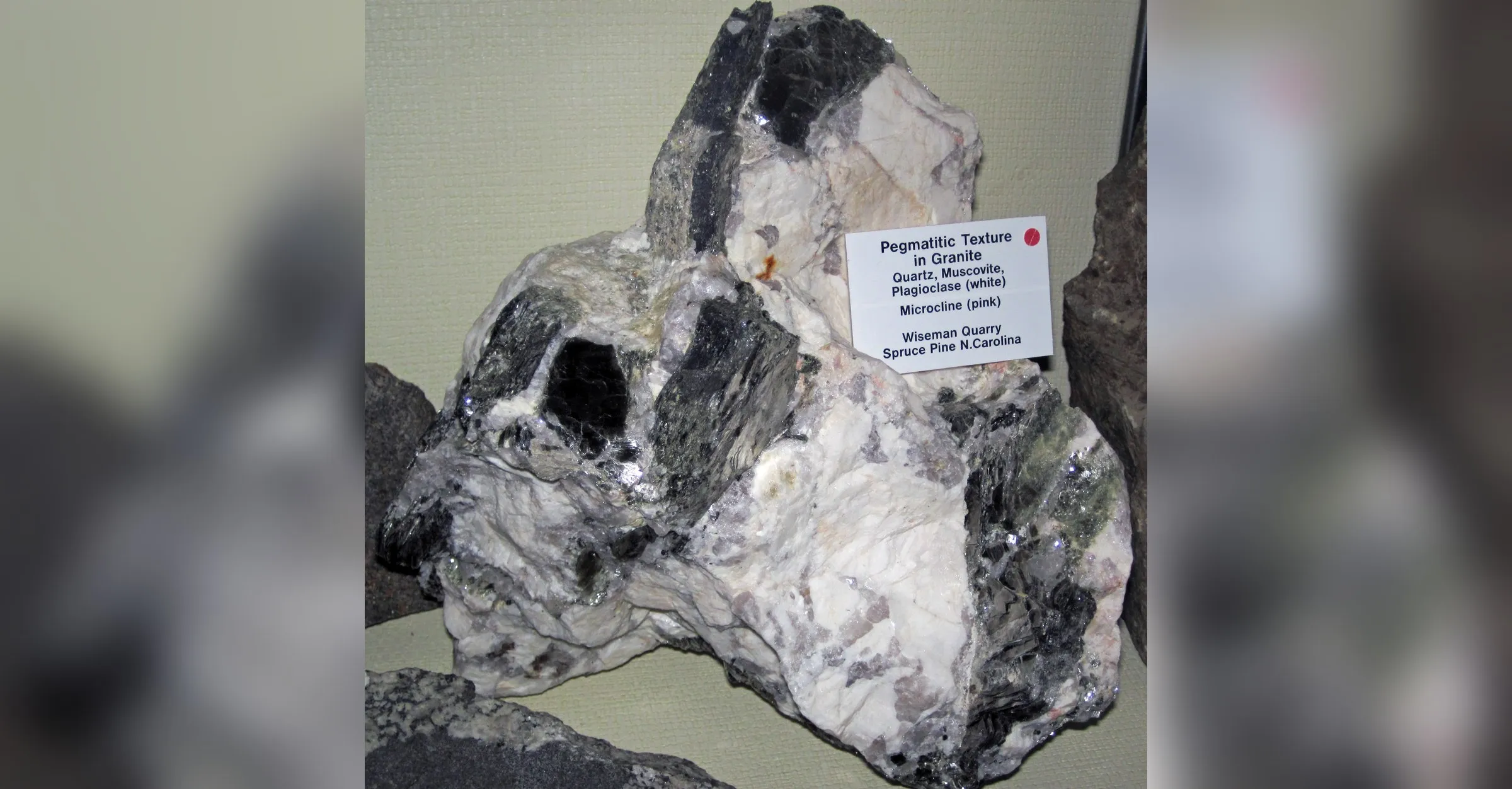
- Where the ore is separated from the feldspar and mica. The Spruce Pine material comes out of a pegmatite mined concurrently for both, so the quartz operation depends on a feldspar operation.
- Where the processing happens. At least one American producer ships material abroad for a further step, so a domestic mine does not imply a domestic finished product.
- Whether the product is mined quartz or grown crystal. These are separate industries with separate data, and only one of them has its American output published.
A quartz manufacturers list that answers those five is short and checkable. High-purity quartz sets out what the purity figures mean and where the applications sit; quartz uses covers the demand side. The suppliers series applies the same questions elsewhere, and silicon carbide is the closest structural comparison: two forms of one material, sold on different specifications to two separate sets of buyers.
Methodology
This page uses the USGS Mineral Commodity Summaries 2026 chapter for high-purity and industrial cultured quartz crystal for domestic production, the price range, the withholding note, the Chinese announcement, the purity definitions, the lascas supply, the import sources and the tariff lines; Sibelco’s high-purity quartz product page for the ore bodies and the end uses; and The Quartz Corp’s published history and its 30 June 2026 restructuring announcement for the company timeline and the closure.
Two limits should be stated. The summary names no quartz producer, so every company-level statement here comes from the company itself and is a supplier claim rather than an independent measurement. And no production figure is published for either American HPQ producer or for cultured crystal, which is why this page ranks by grade and reports no market share.
Sources
- U.S. Geological Survey, Mineral Commodity Summaries 2026: Quartz (High-Purity and Industrial Cultured Crystal), February 2026 (production, price range, withholding, Chinese reserves and purity tests, purity definitions, lascas, imports, tariffs). https://pubs.usgs.gov/periodicals/mcs2026/mcs2026-quartz.pdf
- Sibelco, High Purity Quartz product page (IOTA ore bodies at Spruce Pine, end uses). https://www.sibelco.com/en/materials/high-purity-quartz
- The Quartz Corp, company history (site chronology from 1914 to 2023). https://www.thequartzcorp.com/articles/history
- The Quartz Corp, “Restructuring U.S.”, 30 June 2026 (indefinite closure of one Spruce Pine facility, workforce reduction, stated reasoning). https://www.thequartzcorp.com/articles/restructuring-us
Related
- SpecificationHigh-Purity Quartz: What Crucibles DemandHow high-purity quartz becomes crucibles and quartzware, why natural and synthetic materials coexist, and what supply claims actually establish.
- UsesWhat Is Quartz Used For? Sand to WafersQuartz goes into glass, moulds, well completions, filters, silicon metal and oscillator circuits. The form decides which of those you can buy.
- ProductionQuartz Production: Two Starting Points, One CrucibleQuartz glass is made either by melting purified sand or by burning a silicon gas. A crucible uses both, in two layers, in the same wall.
- Semiconductors · Critical MineralsGallium Uses: Two Compounds, Two IndustriesGallium arsenide turns current into light and back. Gallium nitride survives where silicon breaks down. The choice comes before any supplier call.